01 June 2017

June Newsletter Article


I got nothin’.
This is the fourth attempt I’ve made at a monthly newsletter article in the past 24 hours. To paraphrase from Monty Python and the Holy Grail, each of the first three articles sank into the swamp (or burned down, fell over, then sank into the swamp). I’m hoping this fourth one stays up. 
Every summer, Kristin and I look forward to the end of school and a change in schedule with some anticipation. Yay! Things will slow down! Days are longer! We’ll go camping! Then every summer goes exactly the same as the summer before it: we over-schedule ourselves, forget that we actually have jobs to do on top of all the extra stuff, run out of time to do all the things we want to do, and wind up as exhausted in August as we were in May. I’d love to say it will be different this year, but I’m looking at the calendar and I don’t see it happening. Again. 
God does not intend for life to be a continual, frazzled run from one thing to the next. While I was in San Antonio this week, I had the chance to hear a sermon and a lecture from Dr. Walter Brueggeman, one of the preeminent Old Testament scholars in America today. I was reminded of the lecture I heard him give in January 2009, when he was Theologian-in-Residence at the UCC church in Ames. At that time, Dr. Brueggeman was working on his book Sabbath as Resistance, in which he argued that the constant demand of production and consumption in 21st century American life was every bit as enslaving as Israel’s generations in slavery in Egypt as told in the book of Exodus. In an environment where the Egyptians demanded production without cessation, Brueggeman argues, God created a law of Sabbath which was intended to break the cycle of unceasing labor. Sabbath was not instituted to be one more demand on a servant people: it was instituted for the benefit of the people. Without time for rest and re-creation, Brueggeman argues, we are less than God means for us to be. Ferris Bueller was right: “Life moves pretty fast. If you don’t stop and look around once in a while, you could miss it.” Then you sit down to write your monthly article and you realize you haven’t done much in the way of looking around, and you get what I got: nothin’.
I know you’re all just as busy as we are - some of you even more so. I know that sometimes the luxury of stopping is just not possible. But as we enter this summer, I invite you, for your own benefit, to consider how you could find sabbath for yourself before your well runs dry like mine did today. Turning nothing into something, after all, is what God does - in seminary the fancy Latin phrase we use to describe it is creation ex nihilo. It’s not what we were meant to do. It’s beyond us. So, before your something turns into nothing, schedule nothing for yourself so you can look around and consider the somethings all around you and how God has made them all. Blessings, friends!
Yours in Christ,
Pastor Scott

20 May 2017

Guardians of the Galaxy, vol. 2 - A Theological Review [SPOILERS]

Every year, my birthday (5 May) aligns with the start of the "summer movie season" - a period of time marked by BIG MOVIES WITH STUFF ASPLODING ALL OVER. As much as home theater technology has advanced over the past 20 years, there's just no substitute for the theater experience: fresh popcorn, comfy seats, big screens, LOUD NOISES. This year was a doubly-special treat: Guardians of the Galaxy vol. 2 opened on my actual birthday, which fell on a Friday this year. So I had an absolutely wonderful birthday: early morning workout, golf, an afternoon of reading, grilled a steak for supper, then the whole famn-damily hopped in the car and headed off to the movie theater.

You've likely read several reviews of GotGv2 so all I'll say about the movie as a movie is what I heard from Glen Weldon on Pop Culture Happy Hour: "did you like Guardians of the Galaxy? Here's more of that." What amazed me, however, was the theological juxtaposition presented by the central crisis of the movie: what constitutes family? So, there are spoilers ahead - if you want to maintain some surprises, don't read past the jump!


26 April 2017

Text Study: The Witness of Stephen

Prayer of the Day
Holy Giver and Receiver of life: your martyr, Stephen, shone with the light of your Holy Spirit. When his opponents took his life, he offered up his spirit to you, and prayed mercy for theirs. Make Stephen an example of faith and courage for all your followers, for the sake of the one who brought light and lie to this world, your son, Jesus, our Lord and Savior. 
Amen.

First Reading: Acts 6:1-6
In the early days after the resurrection and ascension of Jesus, the church was absolutely certain that a new world was near, and that Jesus would return quickly. Even so, as the new faith began to take root within the Jewish church, there were problems between local, ethnic Hebrews and the Hellenic Jews who had lived in other places and may not have been ethnically Israelite.
1Now during those days, when the disciples were increasing in number, the Hellenists complained against the Hebrews because their widows were being neglected in the daily distribution of food. 2And the twelve called together the whole community of the disciples and said, "It is not right that we should neglect the word of God in order to wait on tables. 3Therefore, friends, select from among yourselves seven men of good standing, full of the Spirit and of wisdom, whom we may appoint to this task, 4while we, for our part, will devote ourselves to prayer and to serving the word." 5What they said pleased the whole community, and they chose Stephen, a man full of faith and the Holy Spirit, together with Philip, Prochorus, Nicanor, Timon, Parmenas, and Nicolaus, a proselyte of Antioch. 6They had these men stand before the apostles, who prayed and laid their hands on them.

second reading: Acts 6:7-7:2a, 44-60
After a time, Stephen’s witness to Jesus drew the attention of the Jewish authorities, who continued to be very concerned about the Jesus followers in their church. Eventually, Stephen’s preaching brought about a harsh response: death by stoning for blasphemy, and Stephen became the first follower of Jesus to die as a witness to Jesus.
7The word of God continued to spread; the number of the disciples increased greatly in Jerusalem, and a great many of the priests became obedient to the faith. 8Stephen, full of grace and power, did great wonders and signs among the people. 9Then some of those who belonged to the synagogue of the Freedmen (as it was called), Cyrenians, Alexandrians, and others of those from Cilicia and Asia, stood up and argued with Stephen. 10But they could not withstand the wisdom and the Spirit with which he spoke. 11Then they secretly instigated some men to say, "We have heard him speak blasphemous words against Moses and God." 12They stirred up the people as well as the elders and the scribes; then they suddenly confronted him, seized him, and brought him before the council. 13They set up false witnesses who said, "This man never stops saying things against this holy place and the law; 14for we have heard him say that this Jesus of Nazareth will destroy this place and will change the customs that Moses handed on to us." 15And all who sat in the council looked intently at him, and they saw that his face was like the face of an angel. 
1 Then the high priest asked him, "Are these things so?" 2And Stephen replied: "Brothers and fathers, listen to me…
44Our ancestors had the tent of testimony in the wilderness, as God directed when he spoke to Moses, ordering him to make it according to the pattern he had seen. 45Our ancestors in turn brought it in with Joshua when they dispossessed the nations that God drove out before our ancestors. And it was there until the time of David, 46who found favor with God and asked that he might find a dwelling place for the house of Jacob. 47But it was Solomon who built a house for him. 48Yet the Most High does not dwell in houses made with human hands as the prophet says,
49'Heaven is my throne, and the earth is my footstool. What kind of house will you build for me, says the Lord, or what is the place of my rest? 50Did not my hand make all these things?'
51You stiff-necked people, uncircumcised in heart and ears, you are forever opposing the Holy Spirit, just as your ancestors used to do. 52Which of the prophets did your ancestors not persecute? They killed those who foretold the coming of the Righteous One, and now you have become his betrayers and murderers. 53You are the ones that received the law as ordained by angels, and yet you have not kept it."
54When they heard these things, they became enraged and ground their teeth at Stephen. 55But filled with the Holy Spirit, he gazed into heaven and saw the glory of God and Jesus standing at the right hand of God. 56Look, he said, "I see the heavens opened and the Son of Man standing at the right hand of God!" 57But they covered their ears, and with a loud shout all rushed together against him. 58Then they dragged him out of the city and began to stone him; and the witnesses laid their coats at the feet of a young man named Saul. 59While they were stoning Stephen, he prayed, "Lord Jesus, receive my spirit." 60Then he knelt down and cried out in a loud voice, "Lord, do not hold this sin against them." When he had said this, he died.

NOTES & QUESTIONS

  1. Glossary
    1. Hellenists/Hebrews
      1. In the ancient Mediterranean, some Jewish families either moved or were moved away from Palestine to other centers of population. These became known as the Jews of the Diaspora or “Hellenic” Jews, from the Greek H{llhnikovß, (h)ellenikos, meaning “of the Greeks.” These people were also joined by Jews who welcomed, adopted, and adapted Greek culture and customs into their faith. It was the Hellenic Jews (also known as Hellenizers) who produced the Septuagint, the version of the Jewish scriptures translated from ancient Hebrew and Aramaic into what is known as Koiné Greek (a dialect of Greek spoken in the Mediterranean during the life of Jesus). 
      2. This is a good moment to think about the fact that these early disputes were not Jewish-Christian disagreements: they were church disagreements. There is no early moment when Christians make a decided break away from their Jewish roots - historians and theologians agree that the split between Judaism and Christianity developed in stages between the death of Jesus around 29 AD and the First Council of Nicea in 325 AD. At the time of Stephen’s death, Christians hadn’t even been named “Christians” yet - they were an apocalyptic sect within Judaism much like the Essenes, the Zealots, or the Sicarii (although without the violent tendencies of the Zealots and the Sicarii). 
    2. “synagogue of the Freedmen”
      1. This was not a synagogue as modern believers understand it, but an older interpretation of sunagwghv meaning a “group or gathering of people.” It literally comes from the roots a]gw and sun, meaning “go/lead/drive together.” A synagogue, then, is a collection of like-minded persons. 
    3. Are there other words or phrases that you didn’t quite understand?
  2. Thoughts and Notes
    1. “No one pages through the New Testament without repeatedly reading about violent resistance. The story of Stephen gives us much to consider, lest we forget the atrocities that are part of the Christian legacy--those inflicted upon people of faith, as well as those inflicted by them.” Dr. Matthew Skinner, Luther Seminary. http://bit.ly/2pmQ8Vs 
    2. “Jesus says we are to love our enemies and pray for them, meaning love not in an emotional sense but in the sense of willing their good, which is the sense in which we love ourselves. It is a tall order even so. African Americans love white supremacists? The longtime employee who is laid off just before he qualifies for retirement with a pension love the people who call him in to break the news? The mother of the molested child love the molester? But when you see as clearly as that who your enemies are, at least you see your enemies clearly too.” Frederick Buechner, Whistling in the Dark
  3. Questions to Ponder
    1. What is your history with the story of the martyrdom of Stephen? What have you previously heard or learned? What more do you want to know?
    2. What disturbs you most about this disturbing story? Is there anything that comforts you? If so, what is it?
    3. What other questions do you have about this week’s texts?

06 April 2017

"der Leib Christi"

14When the hour came, he took his place at the table, and the apostles with him. 15He said to them, “I have eagerly desired to eat this Passover with you before I suffer; 16for I tell you, I will not eat it until it is fulfilled in the kingdom of God.” 17Then he took a cup, and after giving thanks he said, “Take this and divide it among yourselves; 18for I tell you that from now on I will not drink of the fruit of the vine until the kingdom of God comes.” 19Then he took a loaf of bread, and when he had given thanks, he broke it and gave it to them, saying, “This is my body, which is given for you. Do this in remembrance of me.” 20And he did the same with the cup after supper, saying, “This cup that is poured out for you is the new covenant in my blood.” (Luke 22:14-20)

05 April 2017

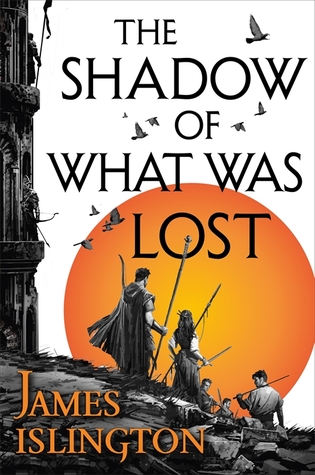
2017 Books: The Shadow of What Was Lost by James Islington


The Shadow of What Was Lost is a worthy addition to the plethora of fantasy epics by the likes of Brandon Sanderson and Patrick Rothfuss. If you like long stories about ancient civilizations, hidden magical powers, and subtexts which may include prejudice and social justice, this will be right up your alley.

01 April 2017

Baptism and the Beast

Preaching Text: Romans 6.1-14
     What then are we to say? Should we continue in sin in order that grace may abound? By no means! How can we who died to sin go on living in it? Do you not know that all of us who have been baptized into Christ Jesus were baptized into his death? Therefore we have been buried with him by baptism into death, so that, just as Christ was raised from the dead by the glory of the Father, so we too might walk in newness of life.
     For if we have been united with him in a death like his, we will certainly be united with him in a resurrection like his. We know that our old self was crucified with him so that the body of sin might be destroyed, and we might no longer be enslaved to sin. For whoever has died is freed from sin. But if we have died with Christ, we believe that we will also live with him. We know that Christ, being raised from the dead, will never die again; death no longer has dominion over him. The death he died, he died to sin, once for all; but the life he lives, he lives to God. So you also must consider yourselves dead to sin and alive to God in Christ Jesus.
     Therefore, do not let sin exercise dominion in your mortal bodies, to make you obey their passions. No longer present your members to sin as instruments of wickedness, but present yourselves to God as those who have been brought from death to life, and present your members to God as instruments of righteousness. For sin will have no dominion over you, since you are not under law but under grace.

From Luther's Small Catechism: Baptism
     What then is the significance of such a baptism with water?
     It signifies that the old person in us with all sins and evil desires is to be drowned and die through daily sorrow for sin and through repentance, and on the other hand that daily a new person is to come forth and rise up to live before God in righteousness and purity forever.
     Where is this written?
     St. Paul says in Romans 6, “We were buried with Christ through baptism into death, so that, just as Christ was raised from the dead through the glory of the Father, so we too might walk in newness of life.”

Since there was an early out in our school district today, I took our girls to see “Beauty and the Beast” this afternoon. Sure, it’s a Disney movie – about as Disney as it gets, really. But something occurred to me as I was watching the end of the movie. Now would be a good time to leave if you don’t know the story and don’t want it spoiled.
The lesson we are all meant to learn from Disney’s version is that looks can be deceiving, that true love is about what one gives, not what one gets. What struck me today while watching the movie was this: the male leads who are “fighting” over Belle attempt to “make” her love them in their own way, and they both fail – miserably. In the Disney story, what turns the tide are two moments of sacrifice. First, the Beast protects Belle from the wolves, and her opinion of him is changed. Second, the Beast releases Belle even though he knows it is his doom. The end result of all that work by the Beast is this: he dies.
What I loved about this new version of the movie is the presence of the Enchantress at the end. She’s the one who exchanges his ugly Beast form for that of his original body. She’s the one who raises the Beast from death into life. Yes, it is Belle saying “I love you” that proves the Beast has truly changed, but the last petal has fallen from the rose. By the rules of the curse, the Beast should either be dead or forever bound to his cursed form. But the one who has the power to change things chooses to do so. The Enchantress brings the Beast back to life. Once this happens, the Beast is free. There are no further conditions on his life – it is possible he could lapse back into his selfish ways. True love is always free, even if that freedom comes with danger.
Tonight I’m seeing this as a baptismal metaphor. In baptism, Luther says, the old sinner – the beast – is drowned, and a new saint – the prince/princess – is raised into new life. Once this happens, God sets us free. There are no roses under glass waiting to shame us back into working to make ourselves lovable. Baptism raises us up and sets us free. On our own, our efforts to make ourselves lovable will end in death – but baptism raises us out of that death into new life.
You have been set free, friends, but the power of the One who raises you out of death into life. God be praised – live free, and love well. Amen.

09 January 2017

Dear Unsigned Letter Writer,


"Children reflect family values very well. Of more than 127 letters (note: 5 from the local newspaper were copied on the reverse side) I found only 8 that did not have great lists of wants; not one word for other needs and desires. Where are family values? One child only wanted to see Daddy once in a while - how very sad. What can we expect from tomorrow's citizens and leaders? What values & love?? We are failing our children every day."

01 January 2017

January Newsletter Article

Dear brothers and sisters in Christ,
Happy New Year! Like many of us, I’m always interested in looking ahead to what new things may come with the turning of the calendar pages. Let me use this space this month to fill you in on some upcoming opportunities for growth at St. Petri.
We will continue our twice-monthly gatherings to go through The Lutheran Course for a few more sessions, and I’ve enjoyed the Sunday evening meetings so much I’m going to continue with additional courses as well. After we complete The Lutheran Course we’ll shift to a slightly different format with a book I’ve wanted to explore for quite a while: Lutheran Questions, Lutheran Answers by Martin Marty. This little volume comes highly recommended by both theologians and my mother, so I’m excited to get started with it in a few weeks. The format will be to read and discuss one chapter (10-15 pages) each session: as we draw closer I’ll have a schedule printed up for those who want to take part. I’ll have order forms ready for folks in a few weeks as well - cost will be $14/book. If I’ve figured the dates correctly, this course should start on Sunday, March 12th and will last until September, meeting the 2nd and 4th Sundays of each month at 6:00 p.m.
I’m also restarting the Wednesday Bible Study group at Dinners By Dawn in Story City. We’ll meet in the back room at 11:30 a.m. every Wednesday I’m in town and discuss the Bible readings for the upcoming Sunday together. No, you don’t have to buy food to be part of the study (although I’m sure Dawn would appreciate your patronage if you’re able), nor do you have to come every single week. This was a very enjoyable group for folks to drop in when they were able, and as your preacher it has always been very helpful to have input on the text at hand from the members of our congregation. I hope to see you when we restart this Bible study on Wednesday, January 4th at 11:30 a.m. 
These are just a few opportunities for continued growth in faith as a member of St. Petri - if there are topics or events you think would be beneficial for us as a congregation, please contact me and I’ll be happy to look for ways we could put your thoughts into action!
How about you? What’s new with you this new year? Personally, I have started seeking a Spiritual Director with whom I’ll be visiting monthly to talk about the state of my ministry, my personal growth in faith, and the rest of my life as a child of God. That’s the big resolution this year for me. I encourage you to look beyond the usual resolutions and take some time to assess how investing your spiritual health could be helpful for many other areas of your life as well. If you’d like resources for your personal growth, please make an appointment with me and we’ll see if we can’t find something that helps you grow.
I pray you will all be blessed by the goodness and grace of our Lord Jesus Christ in this new year. It is, as always, a true blessing to serve you as your pastor, and I’m excited to see where this year will lead us together. 
Yours in Christ,
Pastor Scott

20 December 2016

Doctor Strange and the Theology of the Cross

"We never lose our demons: we only learn to live above them." The Ancient One - Doctor Strange

31 October 2016

The Eighth Commandment: You shall not bear false witness against your neighbor.
What does this mean?
We are to fear and love God, so that we do not tell lies about our neighbors, betray or slander them, or destroy their reputations. Instead we are to come to their defense, speak well of them, and interpret everything they do in the best possible light.

I don't know about you, but I am more ready for this election season to be over than any I've ever experienced.

Eighteen months of campaigning. Eighteen months sorting fact from fiction. Eighteen months of partisanship, obstruction, gaslighting, and paranoia. In recent weeks the veneer of substantive political discernment has been ripped away completely, revealing a sordid game of lurid sexual misbehavior and assault (fictional and actual), an almost complete disregard for facts or the rule of law, hacked emails, torched campaign facilities, graffitied mosques, and invective that buries itself so far beneath what we should expect from our elected leaders that we'll need to look up to even see what disappointing public discourse looks like.

Here's the thing, though: we've taught our politicians that this sort of campaigning works. We have elected leaders who have capitalized on polarization, fear-mongering, and scapegoating to get themselves elected, only to discover they cannot work with fellow elected leaders who used the same tactics but don't have the capacity to set them aside once the campaign is over and the work of governance begins.

Thankfully, Brother Martin gives us a way out of this festering swamp of half-truths and character assassinations - if we have the courage to choose the hard path of truth-telling and fair listening instead of the easy slide back into mudslinging and obstructionism. Famous for his invective, it seems as though Luther was the last one who should have written about bearing false witness, but in his definition of the 8th Commandment Luther lays out a vision of a community we would be fortunate to call home. To be sure, politics in Luther's time didn't resemble the modern nation-state. Luther wrote his Small Catechism for households to learn how to deal with each other - the concept of representative democracy wouldn't be put into play in the U.S. for another two centuries. Yet Luther's Germany was experiencing a political revolution in addition to a spiritual reformation. Without the support of princes willing to defy the emperor and the pope, Luther would have been executed long before any sort of transformation was able to take hold. Luther himself spoke bluntly to princes and commoners alike: he admonished the peasants when they rebelled against their feudal lords, but also criticized the lords when they violently put down the Peasants' Rebellion of 1524-1525. One of the most under-appreciated aspects of Luther's work was his willingness to debate, to question himself, to convince and be convinced by means of disputation, and to acknowledge his own shortcomings as well as the admirable qualities of his friends and opponents.

When I meet with couples for counseling prior to marriage, we always spend time in an exercise called "Active Listening and Assertive Speaking". In the exercise, each partner takes three opportunities to state a desire they have for the relationship, using "I" language and avoiding "you" language ("I feel frustrated when the kitchen is a mess" instead of "You never clean the kitchen"). When each partner has stated their desire, the other partner is asked to repeat the statement back in their own language, in such a way that it is clear they have understood what their partner is saying. I remind each couple that in many instances we listen defensively, looking for excuses and opportunities for denial. Active Listening involves listening to understand, not defend. It doesn't even involve listening to agree - the point of the exercise is to remind each partner that part of bearing true witness in their relationship is to see things from their partner's point of view and understand why they may feel the way they feel.

Imagine how our politics would change if we approached the election season with that same mindset! Disagreements are bound to happen, but what a better democracy we might have if our candidates could say, "My opponent X is right to note that this issue is a problem for us. My opponent has attempted to address this issue by doing _____, and while I don't think it worked, I am grateful for my opponent's work on it. Here's what I think we should do to address it: listen well and then you the voters should vote for what you think is the best solution for all Americans."

There are anecdotal tales of presidents, legislators, and staffers regularly crossing the aisle and meeting together to actually achieve the hard work of governing in such a way that the maximum benefit for the most people could be achieved. This sort of work is impossible in an environment dedicated to seeing the worst in those who disagree with you. I hope and pray we will learn from this election and turn toward a better way in the future, and to that end I am rededicating myself to discuss issues instead of people as much as I can. I hope you'll join me in that effort.

Yours in Christ,
Pastor Scott

31 March 2016

April Newsletter Article: The Liturgical Year from Advent through Lent

“Alleluia! Christ is risen!”
“Christ is risen indeed! Alleluia!”
By the time most of you are reading this article, we will have moved from the meditative, reflective season of Lent into the celebratory season of Easter, in which we spend seven weeks proclaiming the resurrection of Jesus with joy and passion. (Yes, I said “PASSION” - consider it an invitation to grow spiritually this Easter season.) But how do we get there in the church calendar? Why is it so early this year and so late in other years? Today I’m going to take a moment to walk you through the “first half” of the liturgical calendar observed by a substantial majority of the Evangelical Lutheran Church in America.

01 March 2016

March Newsletter Article

Beloved in Christ,
Stepping away from our series on worship to give you some snapshots of things going on at St. Petri that deserve some extra attention.

09 February 2016

Doctor Who and Peace that Must be Dared

Three weeks ago I attended a retreat at Carol Joy Holling Camp and Conference Center led by Andy Root, a professor at Luther Seminary in St. Paul, MN. Andy and I are both Gen Xers, and we share a particular affinity for the life and works of Dietrich Bonhoeffer, so when I received a flyer about the retreat from my friends at Carol Joy Holling I signed up right away.


While we were at the retreat, I was also bingeing on Series 9 of the new Doctor Who. This happens a lot in recent years: the series usually debuts during college football season, and as a pastor who loves football, has two kids, and only gets a limited amount of time to enjoy things on any given Saturday, it is unfortunately the Doctor who gets relegated to the vagaries of the DVR (though, of course, the relativity of the time involved makes that relegation more than a little ironic and humorous). This year was no exception. I was finally working my way through the series when we arrived at Carol Joy Holling, and the first night of our retreat was also the night I enjoyed episode 8, "The Zygon Inversion." Having just come from an evening meal where Andy and I enjoyed a robust discussion of recent Bonhoeffer biographies, I already had Herr Dietrich on the brain when I watched the Doctor's epic anti-war speech unfold on my laptop. I'll post a quote here and then the following scene from YouTube, and then tell you what I'm on about.
THE DOCTOR (speaking to 'Bonnie' - who is actually the Zygon leader Zygella disguised as Clara Oswald, the Doctor's companion): These things have happened, Zygella, they are facts. You just want cruelty to beget cruelty. You're not superior to people who were cruel to you, you're just a whole bunch of new cruel people. A whole bunch of new cruel people being cruel to some other people, who'll end up being cruel to you. The only way anyone can live in peace is if they're prepared to forgive. Why don't you break the cycle? (Emphasis mine)
Read more at: http://transcripts.foreverdreaming.org/viewtopic.php?f=53&t=23619


In 1934, at an ecumenical conference in Fanø, Denmark, Bonhoeffer preached a sermon in which he said the following:
How does peace come about? Through a system of political treaties? Through the investment of international capital in different countries? Through the big banks, through money? Or through universal peaceful rearmament in order to guarantee peace? Through none of these, for the single reason that in all of them peace is confused with safety. There is no way to peace along the way to safety. For peace must be dared. It is the great venture. It can never be safe. Peace is the opposite of security. To demand guarantees is to mistrust, and this mistrust in turn brings forth war. To look for guarantees is to want to protect oneself.
I couldn't help but hear the words of Bonhoeffer echoed in the Doctor's impassioned plea for Zygella (and her human counterpart) to "break the cycle!" There has always been something of an anti-war bent to the Doctor, and at times the series has featured moments of great theological and ethical import buried underneath fantastically good television, but this is one of the moments where this watcher felt as if Stephen Moffat and the other writers of the show were channeling a particular theologian, whether consciously or unconsciously. The similarity to Bonhoeffer's argument, and the terrible experiences of the battle-weary Time Lord and the world-weary theologian and pacifist conspirator against the Third Reich, seem to come pouring out of the TV screen into our minds and hearts.

Forgiveness is always a risk. Peace is never certain. But as the Doctor points out, the war that seems to be such a certain guarantee is also uncertain, and in addition guaranteed to be painful, costly, and in the end resolved in only one of two ways: genocide, or diplomacy. Since no one wants to be a genocide, why not engage in the diplomacy before resorting to violence that's going to lead you back to diplomacy in the end anyway?

This is, honestly, one of the things I love about Doctor Who. Leave aside the comical costumes and the iffy (if improving) special effects. The epic storytelling and the dedication to playing out the ethical consequences of one's decisions are an invigorating contrast to the rampant jingoism and chest-thumping machismo of what passes for governance in much of contemporary American life. Hearing what appears to be the Doctor channeling a beloved theologian of mine was music to my ears, and worth noting and sharing with anyone else who cares to hear about it.

31 January 2016

February Newsletter Article

Dear brothers and sisters in Christ,

In a few short days, the season of Epiphany will come to a close and the liturgical season of Lent will begin. I am one of those people who finds the season of Lent to be an annual challenge and blessing – it is a time in the church for heightened awareness about our sin, God’s mercy, and the life of Jesus in which that mercy overcame that sin.

28 January 2016

2016 Books: The Prophet by Michael Koryta

One of the most enjoyable reading experiences is taking a chance on an unknown author and being very happy you did. In some ways The Prophet was about what I expected: a murder mystery with some interesting plot twists. What I didn't expect was Michael Koryta's excellent investigation into high stakes Ohio high school football and how that sidebar added a bit of punch to the story. Granted, being a former player myself and a student of the game for most of my life, I'm a bit pre-disposed to think well of good football writing, but I believe the casual reader will also enjoy learning a bit about the game in the course of enjoying a well-conceived murder mystery.

The main point of the novel is the relationship between brothers Adam and Kent Austin, both of whom live in their hometown and carry the burden of their sister's murder in very different ways. Their relationship overshadows everything in the novel, even the murder which brings about the action that makes up most of the plot, but it's so well written that the reader will enjoy the curious experience of being distracted by the action instead of the interior monologue as is common in the genre.

No heavy lifting required here - just a good book for a trip, something to read in one long pull and savor all the way down.

26 January 2016

2016 Books in Review: Gatefather by Orson Scott Card

The Mither Mages trilogy started off wonderfully with The Lost Gate and continued well with The Gate Thief. These first two volumes were the usual Orson Scott Card mix of philosophy, theology, fantasy, science fiction, and excellent characterization of the main actors in the plot. This series in particular leans more toward the theology and fantasy side of his spectrum, a curious mix of American Gods and original themes that make for interesting reading. Or listening, which is what I did for the first two volumes (is it me, or do some of you read all of OSC's work in Stefan Rudnicki's voice?).

08 January 2016

2016 Books in Review - Edge of Eternity by Ken Follett

The third book in Ken Follet's massive Century trilogy is, well, long. It has to be - it covers events from the beginning of the Cold War to the election of Barack Obama, ranging from the American Deep South to the coldest reaches of Siberia. It's everything you expect from a Follett historical novel at this point, which is at the same time enjoyable and a touch predictable, if surprisingly so.

05 January 2016

Exposing Dan Skogen

Last week I was made aware of a minor social media kerfuffle between my colleague Clint Schnekloth and Dan Skogen, the man behind the "Exposing the ELCA" blog and Twitter feed. Like Clint, I've known about Dan for quite some time, particularly because he lives in the part of Iowa we call home and has been trolling synodical staff and pastors in our neck of the woods as long as I've been here. Clint's blog does an excellent job of laying out the various options of dealing with Internet trolls, so I'll invite you to take a look if you want to see the entire backstory.
Lutheran Confessions: Exposing "Exposing the ELCA": Meet Dan Skogen. He's the voice and face behind a blog titled "Exposing the ELCA." Well, he does more than blog. He tweets, tr...
Like Clint, I'd been doing my best to mostly ignore Dan for at least six years. Usually that's the best response to trolls and others working out their pathologies through the means of social media. In fact, just this week I recommended that fellow Iowans ignore the ridiculous "halftime show" the Stanford Band performed at the Rose Bowl. It was so obnoxious and insulting that anyone with an ounce of decency wouldn't believe anything about it for a second. In the same vein, the posts at ExposingtheELCA.com are so thinly connected to reality that anyone with the ability to critically engage what he says about the Evangelical Lutheran Church in America can see his agenda for what it is - and adjust their expectations for truth and decency accordingly.

23 December 2015

January Newsletter Article: Worship 101

One of the things I have most enjoyed about my work as a pastor over the years has been the office of teaching - an office that I don't nearly utilize enough. I was thinking about this a few weeks ago while doing some office work and decided this year I would use this newsletter space to do some teaching; specifically, to teach about Lutheran worship and what we're about when we gather together, be it Sunday mornings or any other occasion.

To begin, the word "worship" itself points to a particular activity within time and space, so far as Lutherans understand it. "Worship" is a derivation of the Old English weorthan, from which we also take the word "worthy". We "worship" when we reserve time and space for contemplation, explication, and adoration of "the thing that is worthy" - as Dr. Luther put it in The Large Catechism, "the thing upon which you set your heart and put your trust is properly your god." So, for a person like myself, fall weekends become a time to be careful about where I invest my heart and my time. It would be incredibly easy for the time between Cornhusker kickoff and the final snap to be the most important time of my week - and so to take for myself a god who carries a football and wears scarlet and cream. I know, I know - some of you could argue this has already happened, and will happen again. You're probably right, so let's just move on with the acknowledgment that we're all going to fall short when it comes to worshiping our true God, shall we?

In the earliest years of the church, the followers of Jesus worshiped as faithful Jews in the synagogue, but gathered regularly for a meal that commemorated the Passover meal Jesus celebrated with his friends on the night before his betrayal and crucifixion. Over time, Christians and Jews diverged, and Christians merged reading and teaching from the Hebrew Bible, letters from apostles and other Christian evangelists, and the love meal into one event. After Constantine I made Christianity a legal religion within the Roman Empire in 313 AD, the pattern of worship that had developed organically over the previous centuries was generally solidified into something that would be recognizable today in "traditional" liturgical churches like ours.

"Liturgy" is another term with a more diverse meaning than one might have suspected. It comes from the Greek leitourgia meaning "work of the people" or "public work" - and this work can take place in many different ways! It's a misnomer to say that there are "liturgical" and "non-liturgical" churches; it might be more accurate to say that some churches prefer a more structured liturgy while others tend toward a free, extemporaneous liturgy. There are also gradations within the trends, as many of you know well. Liturgy tends to be an anthropological phenomenon in every congregation around the world, with strains and influences from sources most people would struggle to even remember. One example would be the klokker or "song leader" common in many Norwegian congregations in America from the 1800s through the 1950s - other churches would not have known what this position was or how it worked in worship, but it would have been second nature to most Norwegian churches in this part of the country at one time. Another is the development of monthly communion, mostly due to the scarcity of ordained ministers for frontier churches: what was once a concession to geography and travel requirements became standard practice and, for some, a preference to be defended, even though the early church celebrated communion weekly and would have been mystified by the idea that you could make the meal "less special" by celebrating it more often. Ethnic and ecclesiastical history, regional trends, cultural changes - these and many other influences have shaped Lutheran worship in the United States since the first Lutheran churches were established in the colonies almost 300 years ago.

Today, when Lutherans talk about worship, we generally value a great deal of flexibility around what we consider essential: preaching and the sacraments of Baptism and Communion. The 7th article of the Augsburg Confession states, "it is enough to agree on the preaching of the gospel and the administration of the sacraments...it is not necessary that human traditions, rites, and ceremonies be everywhere alike." We have central principles about worship which we hold in common, but how those principles are lived out tend to be determined by local congregations as seems best in each context. There are Lutheran churches whose worship is barely distinguishable from the highest, most richly ceremonial Episcopalian and Roman Catholic churches, making use of incense, fully chanted liturgies, ceremonial dress for pastors and lay ministers, and much more. There are Lutheran churches whose worship is barely distinguishable from the most charismatic Baptist and non-denominational churches, with raised hands, loud music, shouts of joy and affirmation in preaching and singing, and not a note of chant to be heard above the organ, drums, and choir. What makes the worship in these churches "Lutheran" is NOT a traditional liturgy, but the preaching of the gospel of Jesus Christ and the celebration of our sacraments. For Lutherans, everything must serve the Holy Spirit's work to justify God's people by faith alone apart from works of the law: that's "Lutheran" worship at it's core.

I'm looking forward to the rest of this series this year, and I hope you'll help me by offering questions you'd like me to answer about different aspects of our worship life together. Most importantly, I hope this series enriches your experience in worship at St. Petri and at other houses of worship this year, and that through that enrichment you may find it easier to discern the Spirit's work in your life. I hope to see you in worship soon!

Yours in Christ,
Pastor Scott