This past Sunday I took advantage of an early return from our vacation to Wisconsin to attend worship at St. Petri as just "a guy in the pews." Some of you probably knew this already, but it can be very difficult for a ministry professional to find a time and place where they can be in worship without being "on the job" and therefore able to just participate without feeling the need to tend to every last detail. It was a wonderful experience, particularly given that our preacher delivered an excellent sermon (well done, Anita!). I walked away feeling refreshed and rejuvenated, which is my hope every time I enter a house of worship, whether I'm preaching, leading, or sitting in the pews as simply one of the gathered faithful.
One reason the sermon was excellent is that Anita paid attention to the world and incorporated it into what she felt the text was saying to us. The massacre of 9 brothers and sisters in Christ in Charleston, South Carolina, was not something any responsible preacher of the gospel could ignore or downplay this week. For those of you who couldn't be there, Anita joined the proclamation of the psalmist, "The LORD is my rock and my salvation; whom shall I fear?" with Jesus' promises to always be with us to remind us that trust is developed over time and, particularly, in adverse circumstances where that trust is put to the test. Now is such a time for American Christians. Do we trust that God will help us see a way forward, together, to re-commit ourselves to overcoming the racism inherent in so many of our communities, or do we believe that if we are simply nice to each other we can go back to ignoring this problem that simply will not go away?
In a sense, I'm thankful we were on vacation in Wisconsin when the news of Charleston broke, because I was already actively trying to stay off technology and enjoy some recreational time with our family. It is, after all, impossible to check Facebook when you're shooting down a waterslide with your brother-in-law and nephew, or careening around a go-cart track with your niece screaming in delight and terror next to you. Even gathered around the campfire at night, we spent more time talking and less time clicking our news feeds.
However, I was online enough to know that there were many voices raised with many opinions about what Charleston means, and what we ought to do or not do about it. Some voices raised compelling arguments. Some voices were annoying. Some were so ready to confess sins of which they were obviously not guilty that I couldn't believe they didn't see that stridency often morphs into disingenuousness with very little effort. We pastors were told what to preach by people who didn't know us or the pulpits we occupy, and what we were told to preach was Law so strict and convicting most pew sitters would have shut their ears only seconds into the sermons we were ordered to give. All this made me incredibly grateful that I knew Anita would prepare an excellent sermon focused on our community here at St. Petri, which would address what we needed to hear without being captive to the many voices clamoring for words that would be foreign to our particular community.
Let me be absolutely clear: I am in no way saying that preachers shouldn't have addressed racism in their sermons on Sunday. What I am saying is this: before we speak, before we proclaim, before we prescribe, the first and holiest practice we must observe is listening. We are called to listen to the voices of anguish from Charleston, to be sure, but also listen to the bewildered voices of people who know something isn't right but also aren't sure exactly how to address the problem.
Something incredibly and painfully ironic happened as I "listened" online these last few days. I grew angry at the voices who insisted that I was a racist because my skin is white. I grew angry at the voices who insisted my church is racist, both here in our local congregation and as a denomination. I grew angry because I felt like I was on trial for crimes I hadn't committed just because my skin was the same as the young man who pulled the trigger, and it was in that anger that I saw the painful irony of my experience: that in being judged by my skin I was finally hearing the voices which have cried for freedom and justice for centuries because they have also been judged by the color of their skin.
No person of any skin color should be made to stand in for anyone other than themselves, for each of us has a particular story which no one else may claim as their own. Racism is a sin which will not be overcome by voices pronouncing guilt and judgment, though we will continue to need voices which can and should call out for justice and peace. First, we are called to the holy practice of listening to one another, and a specific kind of listening: listening to understand, to experience, and to affirm, without defensiveness or stridency or judgment. We are called to listen, brothers and sisters, to each individual as they tell their story, to listen for the voice of God present in all of us, and only in doing this do we have any hope of being healed of our own sins so that we might help others heal as well.
Can we listen? Will we listen? That remains to be seen. It is easy to prescribe what must be done, particularly from a distance. The hard work of listening locally, of thinking critically about our place, our work, our people, is a far more difficult and far more necessary thing. How can I listen here and now to the real people I meet every day, and how can we, together, work to judge everyone as Dr. King dreamed - not by the color of their skin, but by the content of their character? This is the work to which we are called, and this is the way we can actively fight racism right here, right now.
Showing posts with label Ponderings. Show all posts
Showing posts with label Ponderings. Show all posts
25 June 2015
05 September 2014
On Sports and Faith and Life and Balance
Bruce Feiler wrote a great article a few weeks ago that my friend Erik Ullestad shared in his weekly "Recommended Reads" email from Elbow Co. (link here) Take a few minutes and read what Bruce has to say about sports, faith, and families today, and then come back here for just a bit of me pushing back but also heartily endorsing much of what Bruce says.
01 May 2014
Book Review: Wide Welcome by Jessicah Krey Duckworth
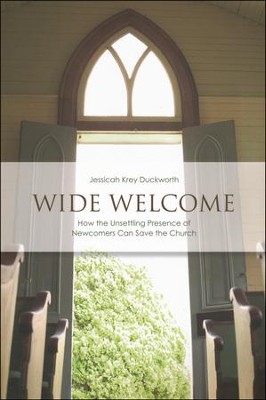 |
| Wide Welcome by Jessicah Krey Duckworth (c) 2013 by Fortress Press, Minneapolis. |
"Congregational life today for many Christians is much more an experience of organizational membership...it usually does not matter what expectations or intuitions newcomers bring to a congregation, because what newcomers encounter is a comfortable, closed gathering in which their presence is not necessarily needed."
"To be a Christian church is for the people under the cross to practice a confession of faith, hope, and love, welcoming newcomers into discipleship practices where faith meets doubt, hope meets despair, and love meets the suffering world."
--Jessicah Krey Duckworth, Wide Welcome: How the Unsettling Presence of Newcomers Can Save the Church, from the Introduction.
Full confession: I count Jessicah Krey Duckworth and her husband Chris as friends in addition to being colleagues in ministry, so I was predisposed to think highly of this book before I even cracked the cover. That having been said, I think Wide Welcome brings a needed and valuable point of view to those of us who are concerned with the future of the church, particularly as the church moves from the age of American Christendom to the emergence of whatever is coming next.
31 March 2014
On Movies, Faith and What's Worth Watching
Movies and people of faith are all the rage right now, what with "Son of God," "God's Not Dead" and "Noah" being in theaters now and "Exodus" on its way later this year. Given that a few weeks ago we took our girls to see a movie and spent what I used to spend for a decent pair of shoes, it's worth taking a moment to think about where to spend your hard-earned entertainment dollars. Maybe you were wondering how the average ELCA pastor thinks about such things. If so, keep reading!
03 September 2013
Let Us Not Live In Fear
A few weeks ago, just after the Evangelical Lutheran Church in America's 2013 Churchwide Assembly concluded its business, a colleague posted a link and I followed it. It was about the recent election of a gay bishop and his taking part in a worship service with other pro-GLBT folks in our denomination. Specifically, it was a liturgical critique; ironic, since most of the GLBT clergy I know are also liturgy geeks, but that's an unhelpful over-generalization and I digress.
09 May 2013
The Small Moments That Change Everything
20 years ago, I was a college freshman working in the snack bar of one of the dorms at the University of Nebraska. I didn't have a job for the summer and was getting nervous. One night, my co-worker Brigette's boyfriend Mike wandered down to walk her home after we closed. He was wearing the staff shirt of the Lutheran camp I had attended as a kid. I told him I'd been a camper there and always thought maybe it would be fun to be a counselor. He handed me a business card for the camp and told me to call them, since they were still looking for male counselors.
I hadn't been to church since arriving on campus. I didn't think a lot about faith. I was going to be a band director and maybe get a job playing in a symphony on the side. But thanks to a chance conversation with the boyfriend of an acquaintance, my entire life changed. (Said acquaintance is now a friend, and also an ELCA pastor, but at the time we weren't anything more than co-workers. Love ya, Brigette!)
So, I asked my colleagues: what are the small changes that led you to where you are now? Here are the answers from those folks who’ve responded.
28 March 2013
Why I Don't Wash Feet In Church On Maundy Thursday
It's Maundy Thursday today. The word "Maundy" is a bastardized version of the Latin mandatum, meaning "commandment." Liturgically, we remember this day as the day Jesus gave his last meal and commandments to his disciples before his betrayal, crucifixion and resurrection. We will gather in worship tonight to remember Jesus' last words to his disciples: "I give you a new commandment, that you love one another. Just as I have loved you, you also should love one another." (John 13:34)
In some congregations, this service will be marked by foot washing. It won't be in ours. Here's why.
In some congregations, this service will be marked by foot washing. It won't be in ours. Here's why.
22 August 2011
To Walk the Lonesome Valley - But By Ourselves?
"If any want to become my followers, let them deny themselves and take up their cross and follow me." Matthew 16.24
I have always loved this spiritual - but today I wonder if its message is entirely correct.
21 July 2011
Parables Re-interpreted
In going over the Gospel text for this coming Sunday, I'm struck by a need to contemporize what Jesus is saying for modern ears.
23 March 2011
Jesus, Self-Awareness and Stones In Need of Dropping
3The scribes and the Pharisees brought a woman who had been caught in adultery; and making her stand before all of them, 4they said to him, “Teacher, this woman was caught in the very act of committing adultery. 5Now in the law Moses commanded us to stone such women. Now what do you say?” 6They said this to test him, so that they might have some charge to bring against him. Jesus bent down and wrote with his finger on the ground. 7When they kept on questioning him, he straightened up and said to them, “Let anyone among you who is without sin be the first to throw a stone at her.” 8And once again he bent down and wrote on the ground. 9When they heard it, they went away, one by one, beginning with the elders; and Jesus was left alone with the woman standing before him. John 8.3-9
01 June 2010
Money Pit or Ministry Center?

When most people who serve professionally in the church (pastors, deacons & deaconesses, diaconal ministers, associates in ministry, etc) envision their careers, do they imagine being required to rebuild something like the sanctuary to my right? I doubt it. Of course, accidents happen, tornadoes and hurricanes and floods strike, and some of us get thrust into building programs we can't avoid because we can't walk away when disaster strikes. That kind of work is honorable and worthy of praise - but it's not what I'm talking about here.
Our campus ministry center is big, old, and in need of a lot of work. A whole lotta work. Like, a crap-ton of work. A good chunk of work got done under my predecessor, and what was done got done well. But that was just the necessary stuff, things to keep the building for falling in on itself. There's a lot to do - and I'm wondering: why, exactly, do we have to do it?
Our Synod Assembly was recently held at Lutheran Church of Hope, one of the largest churches in the ELCA. The place feels like an airport or a new middle school, complete with cafeteria space, a gymnasium, a coffee shop and two worship spaces that hold lots and lots and lots and lots of people. It's an incredible facility, well-built, well-managed, and obviously well-loved, given the number of people that worship there on any given weekend. Even though it's not really the place I'd call home spiritually, I'm glad they're there, and I think the ministry they do is, in many ways, very well done and an important witness to the good news of Jesus Christ. Now, I'm sure they've got lots of qualified people on their staff to handle maintenance there, to make sure stuff gets done the way it needs to get done, but as the pastor in a church with three paid staff, and me being the only one above 20 hours a week, I looked around that church in Des Moines and thought, "Man, I'm glad I'm not in charge here!"
When I first thought about ministry, buildings were the furthest thing from my mind. Bible study? Yeah. Preaching? Of course. Reading and thinking and teaching about God? Absolutely. Caring for the sick and building trusting relationships with the people I serve? No question. But caring for a building? Not even on my radar. Talk about ignorant.
There will be a lot of us in my position in the next 20-40 years: ministry leaders in places where the buildings are far larger than required for the worshiping community and in far more disrepair than is healthy. No, ministry is not all about the building, but we need to be asking ourselves some tough questions in the future:
- "Can we take care of this building, or are there others who could use it more effectively?"
- "Why do we pay so much for a building that is only properly used once a week?"
- "Do we make our building available for public, non-church events, or do we abdicate our building in favor of a more flexible, less labor-intensive way of gathering as a community?"
I'm not planning on going anywhere just yet, but the thought of being the pastor of a church with no facility to manage has some attraction to me. A coffee-shop office and worship in some public space once a week might be the way some of us will have to go - and it might even be more faithful to do so. Not everyone needs a place like Lutheran Church of Hope. Some do, and the "established" church building, with sanctuaries and Sunday School rooms and the like will probably never go away completely. But I think a lot of us are going to need to be creative about our facilities and our communities in the coming years, so that we don't make the mistake of chaining ourselves to money pits we can't manage properly. Every church, from Joel Osteen's big digs in San Antonio to the tiny little church I attended during seminary, is a ministry center - here's hoping we all find ourselves centered where we can actually do ministry.
Grace & peace,
Scott
22 January 2010
Faith, Prayer and Drudgery
It has not been a particularly good week. In fact, I've taken to calling it my "FAILcation."

Every day this week has involved someone being home from day care, whether due to illness, holiday or some other conflict. The van was in the shop from Monday until Wednesday. As you've all noticed, the ice has made walking, the most mundane of daily activities, a task which requires hypervigilance. I've been able to work about a grand total of 12 hours this week, and right now I'm so frustrated I could just scream. (I won't, because the other folks working and studying here at Cafe Milo probably wouldn't appreciate being startled like that.)
The thing is, there's not much you can do about weeks like this. Kids get sick. Vans with 100K miles break down. The ice falls on the just and the unjust alike. Seems I've heard that somewhere before (psst: Matthew 5.43-45).
It's not fatalism to acknowledge that life will be life. If you think so, take a swing through the book of Ecclesiastes and see what the Teacher thinks about life. What I'm concerned with is this: is faith about getting out of unpleasant circumstances, or being able to live right in the midst of them?
See, here's the thing: faith is not about avoiding drudgery. It's certainly not a lot of fun to face the week Kristin and I have had, but praying for an escape from that feels more like praying to Santa Claus than to God. Faith and prayer are not about wish fulfillment; at least, not the kind of wish fulfillment that means running away from that which God has entrusted to us. Prayer is conversation with God about our lives, and faith is the power God gives to believe that the conversation is actually happening.
So I tell God, "Hey, it hasn't been an easy week."
"Yep. How are you holding up?"
"Not so great today. I'm frustrated, disappointed in myself, anxious about a lot of things and feeling like I'd rather just curl up in the basement and hide until spring."
"You know I can't let you do that, right? And that's not what you REALLY want anyway, is it?"
"I suppose not. It's just that I feel like the weather today: grey, icy, cold. I'm not sure I'm going to be a lot of good to anyone today."
"You might be surprised. Anyway, it's not about what you can do - it's about what I can do through you. I'll make sure what needs to happen, happens. You just trust in me and get back into the game. All right?"
"All right - but I'm telling you, what you get from me today might not be pretty."
"Like that's ever bothered me before?"
Faith, prayer and drudgery. As long as you have the first two, the last will never win.
Grace & peace
Scott
06 January 2010
Telling the Story in Different Ways

In perusing the reading list from 2009, anyone with eyes for it will notice that some comic books/graphic novels made the list. I've been reading Neil Gaiman for years now, and finally decided to check out The Sandman rather than wait and see if Gaiman will ever put the story into prose.
On the one hand, you could make the argument that, since I can easily read each of these volumes in a single sitting, they're more illustrated short story than books. But having gone through most of the series now, I'm afraid I'd disagree with you. For one thing, saying you're reading a comic book doesn't really do justice to the act: the words combine with the art to make something more than text, especially something as exquisitely artistic as The Sandman. For another thing, the story's the main point, and Gaiman is, in my opinion, one of the greatest storytellers of the present day, and he seems to be getting better the longer he does it. If you haven't read American Gods, Anansi Boys or Neverwhere, you're missing a lot of really, really good fiction.
It comes down to this: if you can tell the story, tell the story, in whatever medium works best. We in the church could benefit from focusing a bit less on our preferred medium of being and focusing a bit more on telling the story of Jesus in whatever medium works best. Not everyone can be a Neil Gaiman. Not everyone can be a Stephen King, Barbara Kingsolver, Marilynne Robinson. But Stephen King can't preach like Barbara Brown Taylor, either - and who's to say that there isn't an artist out there with the gifts and skills to tell the story of God and God's people with the same beauty, fascination and devotion as the folks who put together the wonderful world of The Sandman?
Some write songs. Some craft sermons. Some build stained glass. Some write icons. Some paint church bathrooms. Some balance budgets. Some teach Sunday School. Some sit by hospital beds. All tell the story of God in one way or another - and all are called to tell the story in whatever medium works best.
Grace & peace,
Scott
03 January 2010
2009: The Year in Review via RevGalBlogPals
Having left the charger to the MacBook behind while on holiday this week, I'm only four days behind on thinking about 2009 in review. Well, thinking publicly, that is. It was a crazy year, for sure.
It's not much of a stretch to say that there are times I resonate quite strongly with this song from Mary Poppins, which currently resides at the top of Alanna's Disney hit parade:
It would be lovely to live like this. But, alas, like Mr. Banks, my life is not so simple. In fact, upon reflection, the year more properly resembles this:
You know, minus the dead Nazis and such. Also, I didn't get shot. But it was definitely more crazy than predictable.
Last Friday's Friday Five at RevGals was about 2009 moving into 2010. Here's my answers.
1. What will you gladly leave behind in 2009?
Two children in diapers. Ainsley is mostly potty-trained at this point, with just nights to go, and she's doing great. I can't tell you how happy I am to be minimizing my daily contact with poo.
2. What is the biggest challenge of 2010 for you?
Living more purposefully. As any regular reader of this blog has noted, posting has become less frequent and of a lower quality, and that's been a snapshot of the year in real life as well. I make no resolutions for 2010 other than this: to live more in the place I am, in the moments around me, and to refine my use of Facebook et al so that it becomes a tool for connecting and not a crutch for living.
3. Is there anything that you simply need to hand to God and say "all will be well, for you are with me"?
Our financial situation. There's a strong possibility that Beloved's call as Family and Youth Ministry Director at our congregation will be terminated in May because right now the deficit between the 2009 budget and projected 2010 giving is so large it's impossible to ignore. We are making changes in our lives to prepare for the worst while hoping things work out for the best.
4. If you could only achieve one thing in 2010 what would it be?
Get my eating and exercise under control and weigh 200 lbs by the end of the year (I'm currently hovering between 225 and 230). Thankfully, I managed to hold off the holiday bulge, but I didn't lose anything, either. I want to be a sub-4:00 marathoner, and that's not going to happen unless I get serious about losing the weight and hitting the pavement. Plus, Jack has turned into a great running partner and I want to continue that bonding time with him.
5. Post a picture, poem or song that sums up your prayer for the year ahead....
You've seen it here before, but it's worth hearing again: "Steady On" by our favorite singers, Storyhill:
I might add that getting to a Storyhill concert in 2010 would be pretty sweet, too.
Grace & peace,
Scott
It's not much of a stretch to say that there are times I resonate quite strongly with this song from Mary Poppins, which currently resides at the top of Alanna's Disney hit parade:
It would be lovely to live like this. But, alas, like Mr. Banks, my life is not so simple. In fact, upon reflection, the year more properly resembles this:
You know, minus the dead Nazis and such. Also, I didn't get shot. But it was definitely more crazy than predictable.
Last Friday's Friday Five at RevGals was about 2009 moving into 2010. Here's my answers.
1. What will you gladly leave behind in 2009?
Two children in diapers. Ainsley is mostly potty-trained at this point, with just nights to go, and she's doing great. I can't tell you how happy I am to be minimizing my daily contact with poo.
2. What is the biggest challenge of 2010 for you?
Living more purposefully. As any regular reader of this blog has noted, posting has become less frequent and of a lower quality, and that's been a snapshot of the year in real life as well. I make no resolutions for 2010 other than this: to live more in the place I am, in the moments around me, and to refine my use of Facebook et al so that it becomes a tool for connecting and not a crutch for living.
3. Is there anything that you simply need to hand to God and say "all will be well, for you are with me"?
Our financial situation. There's a strong possibility that Beloved's call as Family and Youth Ministry Director at our congregation will be terminated in May because right now the deficit between the 2009 budget and projected 2010 giving is so large it's impossible to ignore. We are making changes in our lives to prepare for the worst while hoping things work out for the best.
4. If you could only achieve one thing in 2010 what would it be?
Get my eating and exercise under control and weigh 200 lbs by the end of the year (I'm currently hovering between 225 and 230). Thankfully, I managed to hold off the holiday bulge, but I didn't lose anything, either. I want to be a sub-4:00 marathoner, and that's not going to happen unless I get serious about losing the weight and hitting the pavement. Plus, Jack has turned into a great running partner and I want to continue that bonding time with him.
5. Post a picture, poem or song that sums up your prayer for the year ahead....
You've seen it here before, but it's worth hearing again: "Steady On" by our favorite singers, Storyhill:
I might add that getting to a Storyhill concert in 2010 would be pretty sweet, too.
Grace & peace,
Scott
14 December 2009
Setting Boundaries

The saga of sexuality continues within the ELCA. As it does, I'm more and more curious about how we all set certain boundaries, where we set them, and how blind we can be (all of us) to the sometimes arbitrary nature of how we order our lives.
In some places, the freedom to call and ordain gay and lesbian pastors in committed monogamous publicly accountable relationships is a cause for rejoicing. There are many such persons already serving congregations within the ELCA, some openly (and bearing the subsequent censure required by current ELCA policy) and some covertly. As I read and reflect upon the work of the Sexuality Task Force and the resolutions passed at the 2009 Churchwide Assembly, I sense that the intent was always to allow the diversity of interpretations regarding same-gender human relationships to be reflected in the ministerium of the church. That is to say, we are a church that does not have a unified understanding of same-gender relationships - and our ordained ministers may reflect the diversity which exists within the church, freely and openly.
But for some, this is a step too far. Thus my pondering of boundaries and arbitrariness. I simply don't understand why it is THIS issue that must be the line in the sand. And I continue to be utterly flummoxed by how little I agree with certain segments of the church in which I serve. I mean this in a sense of amazement, not of anger: how is it that David Yeago, Michael Root and I can be educated in the same basic theological vein and yet be so wildly different in how we interpret our Lutheran faith?
I didn't live through the debates surrounding the ordination of women; most of the ELCA's predecessors made that change before I was born. But thirty five or so years after the fact, I see that the consequences of doing that new thing has given us a number of incredibly faithful pastors who, had our church set its boundaries in a different place, would have been denied the opportunity to follow their calling to ministry. And, I feel compelled to note, there are some lousy female pastors who got calls because of this as well - and there will be lousy gay pastors getting calls because the ELCA has opened the door for them. They'll fit in nicely with the lousy straight male pastors, never you fear.
I guess what I'm pondering lately is, why this issue is, for some, the line in the sand that must not be crossed. There are a lot of passages in scripture we have chosen, actively or passively, to violate: why, for some, is this issue the one upon which scripture and the tradition of the church must stand or fall? Why don't we get this worked up over people, like myself, who like blood sausage? Or polyester blend shirts? Or farmers like my Dad who combine every row of their crops? Or the millions of men who shave? All of those items are found in Leviticus 19, one chapter after the verses in Leviticus 18 which list same-gender sexual intercourse among the things forbidden to God's people. And I don't mean the question in a facetious, "I can quote more Bible verses than you" sense, either - I'm honestly trying to figure out, for myself, why my own understanding of the boundaries has changed, and what that means for the future of my own ministry in this church.
I don't claim to have a definitive answer for any of this. In fact, the longer I listen to us bicker, the more distrustful I am of the certain and the confident. How we live together seems more and more a matter to be approached with great humility and a willingness to listen. I am becoming convinced that Meldenius was right:
In necessariis unitas, in dubiis libertas, in omnibus caritas.In necessary things, unity; in doubtful things, freedom; in all things, charity.
Grace & peace,
Scott
04 November 2009
On Seasons, Sleep and Trust
Sent this, more or less, to our students today:
"In peace, I will lie down and sleep; for you alone, O Lord, make me rest secure." Psalm 4.8
 It's the time of year when I tend to get a little anxious about things at our house. No, this isn't our house pictured here, no matter how much I might wish it were. Our little ranch here in Ames is nowhere near as stately, but at this time of year, every house and property needs a good bit of "putting away" at the end of autumn. There are leaves to be raked and mulched, windows to clean and caulk, and in my case, a long, long list of projects I'd hoped to do over the summer that time and other demands simply wouldn't allow me to complete. The shed I hoped to move into the corner? Still occupying a good portion of the yard. The garden I'd hoped to start? Still a dream. The gate I hoped to replace? Might get done if I can convince our daughters to stop getting sick long enough that I can actually take a day off to, well, have a day off and put the thing in the ground. True, I did rebuild our fence to keep the dog in the yard, and just this week I got the first coat of fresh paint on the front door. But there's a LOT that I never got to because life just gets in the way sometimes.
Like it or not, in a few short weeks any possibility to complete these projects will be gone, buried under frost, freezing temperatures and, hopefully, a nice blanket of snow. The hostas will snooze over the winter, the yard will lie dormant, and the only work I'll be doing outside will be lights in December and shoveling all winter long. The earth in this part of the country will sleep, as it does every winter, whether our grand plans have come to fruition or not.
Perhaps you're feeling that frantic, "but I didn't get it all done!" feeling, too. Or maybe, like my daughters, you're fighting the need for rest with everything you've got because there's just so much to see and do yet. My daughters come by this honestly - I'm a notorious night-owl and early riser all at once, and have remarked more than once to my wife, "Life would be just grand if we didn't have to sleep." But sleep, and die, we must - there is a time for all things to be awake and alive and a time for all things to rest, to end, to lie dormant and wait for the resurrecting hand of their Creator.
I love winter, too, but in a few months I'll be outside peering at the ground, waiting for those first blades of green to emerge from our flower beds and in our lawn. And I'll be amazed at the wonder of God's life-giving hand bringing our part of the world out of death into life all over again. Because, as Psalm 121 says, "the keeper of Israel does not slumber or sleep," and we can trust that the one who brings all things to rest will awaken them when the time to rise has come.
As you move toward these things, rest secure in this knowledge: the God who watches over you knows you need rest at times, and you may trust absolutely in the care and keeping of this One who has created you. This world turns at God's bidding, and the same God who draws the autumn to its close and brings springtime out of winter will watch over you as you work AND as you rest. While it is time, friends, do your work to the utmost of your ability; and when the time for rest has come, rest in the unfathomable peace of the living, never-slumbering God.
Grace and peace,
Grace and peace,
Scott
20 February 2009
Old Wounds & Bad Dreams

I had a terrible dream last night. I mean, AWFUL. I don't remember what it was about, really, only that it involved a girl with whom I was absolutely infatuated my senior year of high school and my last week of music camp. Long story short, she wanted friendship, nothing more (in fact, that's pretty much my entire romantic history until Beloved came along), and eventually I got over the crush and we were pretty good friends in college.
But last night she was there, in my dreams, and I can't for the life of me figure out why. Don't worry, it was nothing crude or gross. All I remember is seeing her sitting in the back pew of a church where I was preaching, holding a toddler and smiling wistfully, and a feeling of utter, complete despondency swept over me. Then I woke up. There was more to the dream, a lot more, but I don't remember any of it, only that last, terrible moment.
This isn't the first time this has happened. As a matter of fact, I have these dreams about once a month, with all kinds of people in the starring role: FW, old girlfriends, girls I wanted to date but never did, you name it: everybody gets their moment in the lunatic limelight of my nightmares. I don't understand it at all, but every time it happens I wake up with the same feeling: utter, complete loss and abandonment, followed by a heaving sigh of relief when I realize it was just a dream.
My response is always the same: roll over, snuggle up to Beloved, and remind myself that these dreams can't truly hurt me. Sometimes she wakes up and realizes what's going on, sometimes she doesn't. But I always tell her in the morning, and she always does the same thing: she wraps her arms around me and tells me she loves me. I truly have much in my life for which I'm thankful, but the #1 item on that list is always my beautiful, wonderful partner, who takes me as I am and has never once asked me to be someone I'm not, and for that I'm truly, truly blessed.
I don't understand what these dreams are doing. I'm neither Freudian or Jungian, I'm not a psychoanalyst at all, but I know there's something being purged in these dreams. Old hurts I've long since forgotten, perhaps, but still bleeding nonetheless? Just one side effect of being a person who really can't hide my emotions, complicated by taking a calling where my emotions can get me into trouble? A side effect of depression? (I'm on some mild anti-depressants due to some troubling signs last summer) Hard to say. But, when daylight comes, I'm reminded that they are only dreams, and in the end, whatever they may signify, the truth is who I am in my waking hours: a blessed husband who loves his wife and his girls very, very much, and a person who's tried to live my life as honestly as possible for quite some time now. If bad dreams are the price I have to pay for being who I am, I'm willing to pay it, because who I am came about because of the situations reflected in those dreams, even the bad ones, and I wouldn't trade the experience for anything.
I would, however, like to sleep well tonight, Lord. I'm just sayin'...
Grace & peace,
Scott
Scott
The painting is "The Nightmare" by Henry Fuseli, c. 1782.
12 February 2009
To Forgive And Be Forgiven
 I got one hell of an email the other day.
It was from my ex-wife, who I'll call FW here (because Ex seems needlessly cruel to me, frankly). An email by itself is not an uncommon occurrence for us. After a few years of letting the wounds heal and properly focusing on building good relationships with second spouses, FW and I started emailing occasionally, exchanging Christmas cards, etc. We're not buddies, but we're not strangers, either.
I'm grateful for that, actually: plenty of others are bitter or angry with ex-spouses, generally with cause, but somehow FW and I been able to spare each other the recrimination and angst that sometimes comes with the break-up of a marriage.
All the same, divorce is never pretty, and ours was no exception. We said and did a lot of things we came to regret, and put friends and family in some really unpleasant circumstances. But time does heal wounds, at least partially, and we've been peacefully co-existing for a goodish while now.
So, come forward to earlier this week, when I received an email from her about that awful time, asking for my forgiveness and offering the same to me. For my part, I'd been living in what I can only call practical forgiveness for some time: I bore FW no ill will, prayed for her as she dealt with some adverse health situations, and genuinely celebrated as she found joy. I'd venture to say that the same went for her, too. But the words "I forgive you." never entered the equation, until that email popped into my box the other day, and even though we'd been living forgiven for quite a while, something did indeed change in the actual speaking of the words (well, typing, anyway). The words are indeed performative, as we always said in seminary: they do what they say, and upon speaking and hearing the word "forgive," the very reality in which we live changed forever.
Jesus says in Matthew 11, "Come to me, all you that are weary and carrying heavy burdens, and I will give you rest. Take my yoke upon you, and learn from me; for I am gentle and humble in heart, and you will find rest for your souls. For my yoke is easy, and my burden is light." For years, I thought that Jesus meant exchanging the yoke and burden of sin and doubt for the yoke and burden of faith. I still think that's what he's talking about. But I think Jesus also meant forgiveness, because to forgive someone is to free yourself of the burden of your anger and hurt, to lay it down and take up the new yoke of freedom. Incidentally, that new yoke is much heavier at the start, but as we practice forgiveness it becomes more and more a part of us and less and less something we bear externally.
Forgiveness: laying down a burden you didn't realize you were carrying, to take up another you never knew you needed to bear. Yep: that'll work for today.
Grace and peace,
Scott
26 January 2009
If You've Moved Your Office To A Coffeehouse, Does That Mean You're Emerging?

We're out of internet at the Lutheran Center - apparently I used it all up stalking students on Facebook. KIDDING! Actually, our router and the whole darned network went out on Friday, so the planned upgrade this week just got redefined, from "would be nice" to "gotta have it." Since I
- can't print,
- can't email,
- can't use the online worship planner I usually use,
- can't download the form for my annual report to the bishop, and
- can't do pretty much anything else;
I know people who are doing exactly what I'm doing right now, only permanently. Rather than spend time building, renovating and maintaining a building, their congregations meet in various places, and their pastors spend a lot of time doing exactly what I'm doing today. In some ways, I envy them (especially when we're out of internet). They don't have to spend time recruiting folks to shovel snow, vacuum lounges, or clean bathrooms; they certainly don't have to come up with several thousand dollars worth of internet connections, since they're piggybacking off the locals who offer the service for free.
But I also know that there is something incarnational about being a worshiping community that has a place to call home. Abraham might have been a nomad, and David might have worshiped God in a tent, but God also "dwelt among us," and I think there's something to be said for having a place our faith community can call "home." The price we pay, of course, is vigilance in two ways: tending to the needs of the building, and avoiding the temptation to think the building is the church. Having a long-term home says, "We're not going anywhere: we're in this for the long haul." Being faithful isn't just about Bible studies and coffee shop conversations; sometimes we're faithful by being good neighbors, too, and it's hard to be a good neighbor if you don't know where you live.
09 January 2009
Finding My Spot By The Fire
One of the most endearing memories I have of Larry, my mentor and campus pastor, comes from this time of year. Larry hated winter. I mean, he despised being cold with every fiber of his not-so-well-padded being. Skinny Germans with high metabolisms do not fare well north of the Mason-Dixon line, and even in Lincoln, Nebraska, winter can get cold. So, for a few months every year, Larry would come to the Student Center and immediately throw on the burgundy sport coat he kept in his office for just such weather. Then, when one of us pyromaniacs in the Student Center community would come in and build a fire, he'd come out of his office and find his spot by the fire. He'd warm his hands in front of the grate, and have a seat at the table. If it was really cold, he'd stand just to the left of the fireplace, with his skinny butt pressed up against the stones to keep himself warm.
One of the things I first noticed about the Lutheran Center here in Ames was the fireplace - it's almost exactly like the one in Lincoln. In fact, I have my suspicions that, given the similiarities in construction and the roughly concurrent construction dates, our buildings share the same architect and/or designer. Today, in a burst of inspiration, I finally figured out where my own spot by the fire will be. I've moved two of our wingback chairs on either side of the fireplace, set up a reading lamp, and made myself cozy. With a cup of hot chocolate at my side and a fire burning merrily in the fireplace, it's a nice spot to be.
And so goes the continuing saga of campus ministry for me. Ames is beginning to feel more and more like "our town," which is very good. The campus ministry game is slowing down for me, in football terms: like a quarterback who's learning a complicated offense, I'm starting to see how things fit together and the subtle nuances that can really make or break our ministry. Today, as I sat here writing my sermon, it occurred to me that perhaps someone will remember me in this spot like I remember Larry in his, and if that were to happen, well, I'd be pretty happy to be remembered so fondly. (Except for one of our students, who can't come into the building when there's a fire in the fireplace because of soot and airborne particulate allergies. So, I guess there's only one guarantee, and that's that D will NEVER remember me like this. :-) )
So, here are warm Friday wishes to you all, from my comfy spot by the fire. Peace, friends.
Scott
ps: if you are of the praying sort, please keep my friend Ellen in your prayers - she's received a pretty scary bit of health news today. thanks.
One of the things I first noticed about the Lutheran Center here in Ames was the fireplace - it's almost exactly like the one in Lincoln. In fact, I have my suspicions that, given the similiarities in construction and the roughly concurrent construction dates, our buildings share the same architect and/or designer. Today, in a burst of inspiration, I finally figured out where my own spot by the fire will be. I've moved two of our wingback chairs on either side of the fireplace, set up a reading lamp, and made myself cozy. With a cup of hot chocolate at my side and a fire burning merrily in the fireplace, it's a nice spot to be.
And so goes the continuing saga of campus ministry for me. Ames is beginning to feel more and more like "our town," which is very good. The campus ministry game is slowing down for me, in football terms: like a quarterback who's learning a complicated offense, I'm starting to see how things fit together and the subtle nuances that can really make or break our ministry. Today, as I sat here writing my sermon, it occurred to me that perhaps someone will remember me in this spot like I remember Larry in his, and if that were to happen, well, I'd be pretty happy to be remembered so fondly. (Except for one of our students, who can't come into the building when there's a fire in the fireplace because of soot and airborne particulate allergies. So, I guess there's only one guarantee, and that's that D will NEVER remember me like this. :-) )
So, here are warm Friday wishes to you all, from my comfy spot by the fire. Peace, friends.
Scott
ps: if you are of the praying sort, please keep my friend Ellen in your prayers - she's received a pretty scary bit of health news today. thanks.
Subscribe to:
Posts (Atom)