Showing posts with label ELCA. Show all posts

02 June 2026

A Pastoral Letter to Nebraska Governor Jim Pillen

June 2, 2026 
 
Governor Jim Pillen 
1445 K Street 
Lincoln, NE 68508 

 Governor Pillen, 

Last week, you signed an executive order intended to create a system which will compile complaints and incidents of antisemitism in Nebraska public schools under the Department of Education. You also committed the Department of Education to providing materials on the Holocaust, and you said that state staff will receive anti-harassment and anti-discrimination training. You noted the rise in anti-semitism across the nation and within our state, a rise which concerns me as well. Working to fight religious persecution and reduce intolerance in its many forms is a laudable goal. As a Christian committed to justice and peace for all of God’s beloved children, I share that goal with you. 

However, Governor, your own words during the signing of that executive order showed that you have much to learn about hatred, history, and the people of Palestine, who suffer unjust persecution and violence of their own which also must be brought to an end. You said: “In Nebraska, we do not tolerate hate in any form.” Yet minutes later, you said, “those people [Palestinians] are born to kill Jews and Christians.” Governor, I cannot call those words anything but hatred for the people of Palestine, a dehumanizing dismissal of an entire people based in ignorance and fear. You said, “The only way hatred can thrive is if history is forgotten.” Yet minutes later, you forgot the history of illegal land seizures in the Gaza Strip and the West Bank. You forgot the families who are still refugees within Palestine generations after the creation of the state of Israel. You forgot the estimated 75,000 Palestinians who have been killed by Israeli violence since the horrors of October 7, 2023, a slow genocide that continues today under a ‘cease fire’ in which Palestinian civilians continue to die. 

Governor, you mentioned traveling to Israel, meeting with Prime Minister Netanyahu, and visiting an Israeli village in which 400 people had been slaughtered. I believe you when you describe the horror experienced by that village. The attacks of October 7th were an atrocity, and the people who carried them out should be brought to justice. But your comments last week make it clear that you have not heard from the people of the Gaza Strip or the West Bank, who suffer a no less atrocious violation of their human rights. Allow me to tell you some of their story. 

In January, I traveled to the West Bank as part of a delegation from the Evangelical Lutheran Church in America (ELCA) to celebrate the consecration of the new presiding bishop of the Evangelical Lutheran Church of Jordan and the Holy Land. I was a guest of this small but active Palestinian church for nearly two weeks. I was at the Jaffa Gate preparing for a celebratory procession to the Lutheran Church of the Resurrection just down the street from the Church of the Holy Sepulcher when we received word that the bishop’s family had been detained, his mother threatened at gunpoint by Israeli soldiers even though all the necessary paperwork for entry into the Old City had been completed weeks in advance. I met with a farming family who has spent over $350,000 in legal fees over the last 40 years, fighting an unjust Israeli court system simply to continue farming land which has been legally owned and occupied by their family for generations. I walked through the Aida refugee settlement, where snipers have killed children and civilians without cause and without consequences. I have seen the hills where Israeli settlements are started without legal justification and Palestinians have been forced to relocate yet again without fair compensation. I have met the staff of Augusta Victoria Hospital, a Lutheran World Federation facility which treats Palestinian refugees when no one else will do so, and I have listened to them describe their attempts to provide pediatric cancer treatment within the Gaza Strip only to be denied by the Israeli military for security reasons. Palestinian children are dying of cancer when life-giving care is within reach - and it is not the hatred of Palestinians that prevents that care from reaching those in need. 

Do you know what I never once heard, Governor? I never heard any Palestinian wish for harm to come to their persecutors. Not once. I heard anger at the perpetuation of injustice against the Palestinian people. I heard deep grief at the violence that has killed so many people on both sides of this seemingly unending conflict. I heard fierce pride in being Palestinian, and a steadfast determination to continue to work for justice and peace in the Holy Land. But not once did I hear anyone say, “That Netanyahu, he wants to kill every Palestinian person on the planet.” Not once did I hear any of our hosts say, “those Israelis are born to kill Palestinians.” Not. Once. 

In no way do I mean to excuse or deny the actual violence that has been carried out by Palestinians and Israelis. Atrocities have been committed by both parties, and any hope for a peaceful resolution to the current conflict will require those responsible to bear the consequences of their actions. Continued overgeneralization of this complex conflict, however, will serve only to proliferate an unjust and biased narrative and prolong the suffering of millions as a consequence. 

Governor, when you speak, your words reflect on the Nebraskans you serve. Your dismissive and dehumanizing words about the people of Palestine cast a pall of intolerance and ignorance on all of us. You supported an ill-informed and overly simplistic view of the conflict in the Holy Land. It would have been far better had you said nothing at all. We deserve better than this from you. The people of Palestine deserve an apology, as do your fellow Nebraskans. 

Yours in Christ, 
The Rev. Scott Alan Johnson, Bishop 
Nebraska Synod - Evangelical Lutheran Church in America

22 January 2025

On Prophetic Preaching: A Statement

“As a prophetic presence, this church has the obligation to name and denounce the idols before which people bow, to identify the power of sin present in social structures, and to advocate in hope with poor and powerless people. When religious or secular structures, ideologies, or authorities claim to be absolute, this church says, ‘We must obey God rather than any human authority’ (Acts 5:29). With Martin Luther, this church understands that to rebuke those in authority through God’s Word spoken publicly, boldly and honestly is not seditious but “a praiseworthy, noble, and particularly great service to God.’”

So says Church in Society: A Lutheran Perspective, the first ELCA Social Statement, passed in 1991. Our confessional witness to the gospel of Jesus Christ has always included a political dimension. The Reformation would have been very different if Luther had not been protected by a politician, Elector Frederick the Wise, following his refusal to recant at the Diet of Worms. Luther regularly exhorted the nobility of his day to provide for the people entrusted to their care, regularly providing private counsel and public statements on the issues of his day. The church and the state being accountable to each other and to God from their respective realms of authority has been a mainstay of Lutheran theology and practice for over 500 years. 

Many people have said a lot of things about Bishop Mariann Budde’s sermon yesterday at the National Cathedral. While Bishop Budde is not sworn to the same confessional teachings as I am, being a minister of the Anglican communion, I found her words to be exactly the thing to which the ELCA committed itself over 30 years ago: a bold, honest, public rebuke of those in authority, an act of advocacy on behalf of those who have neither the power nor the means to offer that word themselves. I applaud her courage and I gladly join her in exhorting those in authority, regardless of their party, faith, or any other affiliation, to realize that their words, principles, and policies will affect more than their supporters, and that they have a duty and responsibility to all of the children of God that have been entrusted to their care.  

25 April 2024

ELCA Church Council Report

The bishops from each of the 9 regions of the ELCA select one of their number to serve as a liaison to the ELCA Church Council for terms of 4 years. I serve as the Region 4 liaison bishop, and I attended my first ELCA Church Council meeting in Chicago April 11-15. What follows is my own reflections on the meetings; here is the link to the official news release from the Churchwide office.

What struck me most deeply in our time together was the wide scope of our church that is represented in that relatively small body. What we see in our local experience is only one part of who we are as the Evangelical Lutheran Church in America; sitting with council members from across the country it is much easier to see just what an amazing array of people we are (and the people themselves are pretty amazing in their own right). The denomination is well-served by this group of leaders. 

I’m one of two bishops working with the Faith, Society, and Innovation Committee, and we spent a lot of time wordsmithing two documents: a Social Message on Gun-Related Violence and Trauma, and the draft of the Social Statement on Civic Life and Faith. Both are crucial statements in our current environment, particularly the statement on Civic Life and Faith, which will be in its public feedback period until Sept. 30, 2024. I encourage you to make time to read and provide feedback. 

Other items of note:

  • Presiding Bishop Eaton has returned from her time of personal leave and is very much back at work. In particular, she is working toward concrete action steps related to the Future Church and God’s Love Made Real projects, utilizing an implementation team that will be conducting online Town Hall meetings with Bishop Eaton in each region of the church in coming months. She was thankful for the time away to rest and recharge, and for the care given to her in that time, but is excited to move beyond research and studies into concrete action. 
  • The co-chairs of the Commission for a Renewed Lutheran Church commented on a few findings within their work:
    • The Commission has been amazed to realize how deeply the influence of the predecessor denominations still affects the ELCA, 35 years post-merger.
    • The variety of practices in synods and regions is sometimes a contextual benefit and sometimes not. Some leaders genuinely lead and some are obviously carrying out agendas for others within the church. 
    • It is clear that “Who are we?” is a question being asked throughout the ELCA. We have significant difficulty knowing where the ELCA fits as one slice within the worldwide church as a whole. 
    • The institutions, organizations, and ministries which relate to the ELCA as separately-incorporated non-profits (think camps, campus ministries, service agencies, etc. which we often know as “serving arms”) are passionate supporters and innovators within the church. There was once some desire to begin referring to this group of folks as a “fourth expression” of the ELCA - it has since morphed into a preference for “related institutions, organizations, and ministries” instead, which has, of course, morphed into an acronym: RIOMs. 

Finally, I’ll end with a reflection from the Rev. Dr. Betsy Miller of the Northern Province of the Moravian Church, who brought greetings as a representative of our full communion partners. In describing the reality she sees as a leader of a church with fewer than 50,000 adherents, she said, “We’re a mission movement. We never should have become a denomination.” As much as the people gathered in Chicago were there to conduct the business of the denomination, I did have a definite sense that the mission, GOD’s mission for the ELCA, was in the midst of all our conversations. I think this will be the challenge of our time as the ELCA: in an age of institutional transformation, will we be captive to supporting the denomination at the expense of mission, or can we pivot to being a mission movement with a denominational structure that supports that mission? I'll be pondering this for a while yet; it's unsettling in the most spiritually enlightening sort of fashion.

Yours in God’s restless peace,

Bishop Scott Johnson  

02 April 2018

April 2018 Newsletter Article


Dear sisters and brothers in Christ,
Alleluia! Christ is risen! Christ is risen, indeed! Alleluia! So goes the shout of the church in this Easter season. With Christ arisen, we, too, live again in the hope of resurrection and in life that extends far beyond the grave. The question before us, now that death no longer holds us captive, addresses a new hope for the future:  how shall we live? 
One of the marks of Christian life after Easter has always been generosity. In the days of the early church, believers often gathered together for communal meals, and some communities actually created a sort of communal society, where all goods were held in common and all shared freely from what God had entrusted to them. Two millennia later, we Christians of the 21st century still practice this generous sharing of what God has entrusted to us. Here at St. Petri, we share a beautiful, historic congregation with its own building and local ministries. We also share as a congregation to support ministries beyond our local community. Over the next few months, I’m going to share the stories of these ministries with you, so that you will be better informed about what happens to every dollar you return to God in thanksgiving for what God has given to you. 
The largest portion of our giving goes to the Northeastern Iowa Synod of the Evangelical Lutheran Church in America. In a newsletter article a few years ago, Pastor Mark Anderson of the NEIA Synod Staff shared a brief glimpse of the many ways the Synod partners with our congregation in the ministry of our church:

This is too short a space to review all the synodical ministries or narrate the budget, but here is a summary of what I think readers will care about the most.
Sharing Jesus and Supporting Congregations
Evangelism
  • Use a strong social media presence to proclaim the Word, call the church to prayer, and lift up and encourage congregations’ witness.
  • Consult with congregations who request assistance in renewal, stewardship, and evangelism.
  • Accompany our new worshiping communities in Farley and Parkersburg.
Passing on the Faith from Our Generation to the Next
Youth, Family, & Young Adult Ministry
  • Provide help for parents to teach the faith to their children.
  • Support youth workers and youth ministry.
  • Offer Christian leadership training for high school students.
  • Support campus ministry.
Raising & Supporting Pastoral Leadership for Congregations
Leadership
  • Walk with candidates through the process of becoming pastors and other rostered leaders.
  • Secure funding to support Seminary Education.
  • Train and coach new pastors.
  • Guide congregations through the call process.
  • Provide continuing education opportunities for rostered leaders.
  • Help church leaders to prepare to retire.
Sharing Daily Bread & Working for Opportunity
Poverty & Justice
  • Domestic Hunger Grants fund community and church gardens to grow food for food shelves, food banks and community meals.
  • Barnabas Uplift provides job training for the unemployed.
  • Provide funding to Lutheran Services in Iowa for the care of children, families, the elderly, and people with special needs.
In addition to undesignated “mission support,” (offerings received from congregations) the members of the Northeastern Iowa Synod last year gave:
  • $177,000 to ELCA World Hunger
  • $55,000 to support Lutheran World Relief
  • $49,000 to support missionaries
  • $48,000 to the ELCA Malaria Campaign
  • $15,500 to Domestic Disaster Response
We give thanks for all those people and congregations who give to support the wider church and for all the ministries these gifts make possible.

This is just a snapshot of the many ways we congregations of the Northeastern Iowa Synod provide support to one another through the offerings we pass on in mission support. Individual congregations could not do this on their own, but together we support and encourage one another, and the sum of what we can do together is much larger than the parts each individual church offers. I join Pastor Anderson in thanking you for your generous support of our ministries, and I encourage you to grow in that generosity in 2018!

Yours in Christ, 
Pastor Scott

01 October 2017

October Newsletter Article

Above all, clothe yourselves with love, which binds everything together in perfect harmony. And let the peace of Christ rule in your hearts, to which indeed you were called in the one body. And be thankful. - (Colossians 3:14-15)

13 October 2015

Fall Theological Retreat

This week I'm in Dubuque, IA for the Northeastern Iowa Synod's Fall Theological Retreat (#NEIAFTC). This annual event is a highlight of the year for me: I get to spend time with my colleagues in worship, prayer, and reflection; the speakers are usually very good; there's time for recreation; and I generally go home energized for parish ministry (which is good, because 72 hours away from the office generally leaves me with plenty to do when I do return). This year, everything on my list has happened just as one would hope.

11 February 2015

An Open Letter to the LGBT Community from Bishop Michael Rinehart

This is worth reposting. No, we in the ELCA do not agree on the issue. But we are agreed that we want to be a place that welcomes all people. Thanks to Bishop Michael Rinehart for this letter.

08 May 2014

Book Review: Mediating Faith by Clint Schnekloth

(c) 2013 by Fortress Press

Contemporary media studies would remind us, if nothing else, that all of life is mediated, and much more is media than we are often aware. (p. 3) 
Humans, though they speak of technology as if it were separate from them, are virtually incapable of living a nontechnological existence. (p. 102)
--Clint Schnekloth, Mediating Faith:  Faith Formation in a Trans-Media Era

It is with these thoughts in mind that Clint Schnekloth embarks on an examination of what it means to be faithful, as an individual Christian and as a leader of Christian community, in an age of constantly developing media and technology.  Published from a dissertation presented toward earning the Doctor of Ministry degree at Fuller Theological Seminary, there is much here that will be helpful for all of us trying to navigate the waters of our trans-media times.

01 May 2014

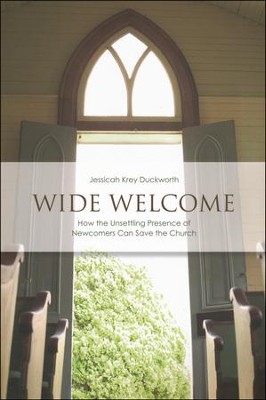
Book Review: Wide Welcome by Jessicah Krey Duckworth

Wide Welcome by Jessicah Krey Duckworth
(c) 2013 by Fortress Press, Minneapolis.
"Congregational life today for many Christians is much more an experience of organizational membership...it usually does not matter what expectations or intuitions newcomers bring to a congregation, because what newcomers encounter is a comfortable, closed gathering in which their presence is not necessarily needed." 
"To be a Christian church is for the people under the cross to practice a confession of faith, hope, and love, welcoming newcomers into discipleship practices where faith meets doubt, hope meets despair, and love meets the suffering world." 
--Jessicah Krey Duckworth, Wide Welcome:  How the Unsettling Presence of Newcomers Can Save the Church,  from the Introduction.

Full confession:  I count Jessicah Krey Duckworth and her husband Chris as friends in addition to being colleagues in ministry, so I was predisposed to think highly of this book before I even cracked the cover.  That having been said, I think Wide Welcome brings a needed and valuable point of view to those of us who are concerned with the future of the church, particularly as the church moves from the age of American Christendom to the emergence of whatever is coming next.

04 March 2014

Ash Wednesday: Bring Your Kid

Tomorrow is Ash Wednesday.  For Christians, the Ash Wednesday service marks the beginning of the season of Lent, a penitential period in which we fast, discipline ourselves, and reflect on the life and love of our Lord Jesus Christ.  It is a holy time of anticipation and purpose, and for many it is our "favorite" season of the church.

But Ash Wednesday begins with a stark reminder of our mortality.  Ministers dip their thumbs in a bowl of ashes made from the palm branches waved to honor Jesus on Palm Sunday and mark a cross on the foreheads of all participants, while pronouncing a death sentence on us all:  "Remember that you are dust, and to dust you shall return."